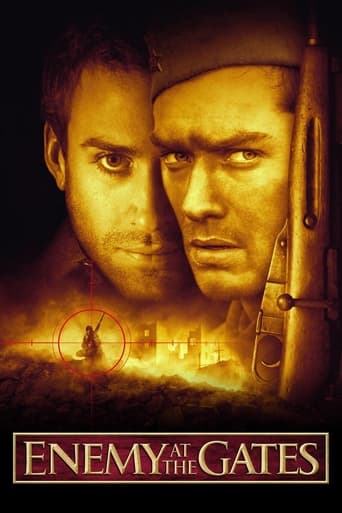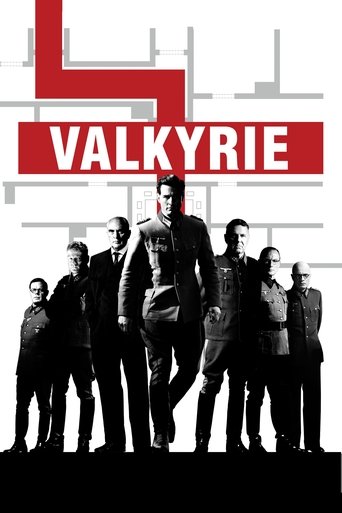
















**_Hitler’s end_** As the Red Army encroaches upon Berlin in late April, 1945, the final days of Hitler in his bunker (Bruno Ganz) are told from the perspective of his secretary, Traudl Junge (Alexandra Maria Lara). "Downfall” (2004) is not a conventional war movie due to its downbeat subject and is more educational than entertaining, but it’s a necessary piece of the puzzle in understanding WW2. If you appreciate movies like "Enemy at the Gates" (2001), "The Pianist" (2002), "Black Book" (2006), "Valkyrie" (2008), "Rommel" (2012), "Warsaw '44" (2014) and "Fury" (2014), you’ll appreciate this one too. It's hard to rate a flick like this because it’s not an enjoyable experience, but it works superbly as means to go back in history and view Hitler’s final days. The film runs 2 hours, 36 minutes, and was shot in Germany (Berlin, Munich and Bavaria Studios) and Russia (St. Petersburg). GRADE: B
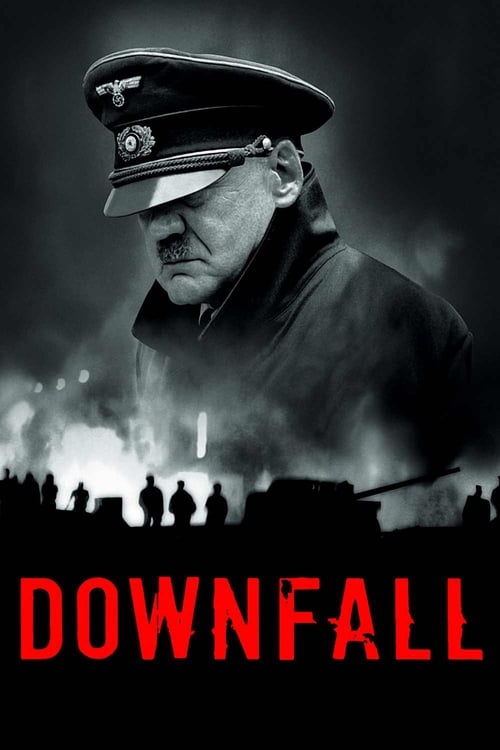
Downfall
"April 1945, a nation awaits its... Downfall"
In April of 1945, Germany stands at the brink of defeat with the Russian Army closing in from the east and the Allied Expeditionary Force attacking from the west. In Berlin, capital of the Third Reich, Adolf Hitler proclaims that Germany will still achieve victory and orders his generals and advisers to fight to the last man. When the end finally does come, and Hitler lies dead by his own hand, what is left of his military must find a way to end the killing that is the Battle of Berlin, and lay down their arms in surrender.
Oliver Hirschbiegel
Bernd Eichinger
Production
 NDR
NDR ORF
ORF ARD Degeto
 WDR
WDR RAI
RAI Constantin Film
Top Billed Cast
Videos & Trailers
Gallery
Audience Reviews
Though he might not much like the compliment, Bruno Ganz is superb as the Führer in this dramatisation of his last few days in Berlin. If you saw George Schaefer’s attempt at this, with Anthony Hopkins in the title role (1981) then you’ll already have the gist of what occurs, but this has an altogether less dramatic, more natural, feel to it. It helps, of course, that those of us watching know now just how precarious his situation was, but for him surrounded as he was by yes men, Ganz portrays a man who genuinely believes the war is there to win. None of his acolytes have the courage to tell him he is defeated, and those who do appreciate it are all too often working on plans to save their own skins. The assembled supporting cast here, including many of those playing the wives like Corinna Harfouch (Goebbels) and Juliane Köhler (Braun) as well as that of secretary Trudi (Alexandra Maria Lara) help to keep this chronology remarkably human. This is a personification of their situation and though we know that evil lived here, this illustrates more a man who is sick. Physically and psychologically sick. That’s not to suggest it makes apologies for the man, but oddly enough it makes him a little more comprehensible amidst histories that unequivocally vilify the man. This isn’t so much about Naziism, or the politics of hate and bigotry - we join the timeframe too late for those to be relevant, it’s more about a realisation of failure, it’s ensuing panic and even the surprising degree of loyalty from those (usually) lower ranks who really were his true disciples. On that last point, Oliver Hirschbiegel also powerfully illustrates the power of indoctrination with children not yet in their teens enthusiastically manning the city’s defences whilst still proudly sporting their swastikas. Clearly just a little thought might have encouraged their officers to let them get back to what remained of their homes and families instead of facing the oncoming Soviet troops. It’s the cumulation of the threads as we build to quite a delicately paced denouement that gives this a considerable degree of plausibility. The production design and visual effects as the city collapses mirror nicely the mental collapses going on under the ground, and though we won’t often have seen a film that attempts this kind of level of objectivity about these events, this is certainly a poignant way to see a destructive man destroy himself.